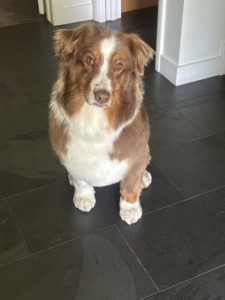
Have You Met My Dog?
Don’t want to read? Take a listen here.
If you have, you probably remember him. He’s not a breed you see every day. There are a fair amount of Australian Shepherds out there, but nowadays I feel like I more often see doodles — of all sizes, shapes, and colors — and less of any kind of shedding dog. Goldendoodles, Labradoodles, Bernedoodles… it’s an avalanche of fluffy canine cuteness. My guy, meanwhile, leaves a trail of crimped fur on every couch he touches and is not even a little sorry about it.
He’s also very vocal. He talks like he’s part Husky, expressing his joy at seeing people he knows, those he doesn’t know yet, and every dog he’s ever wanted to meet. You always know exactly how he feels.
Up until this month, I would have told you he hasn’t met a dog he doesn’t want to sniff or play with. Now, though, I’m noticing something new. When he’s off leash in the park, there are certain dogs he just flat out ignores. Doesn’t trot over. Doesn’t sniff. Doesn’t even throw a single bark their way. He’ll be bounding toward a group, catch a glimpse of one dog in particular, and just… redirect. Like they don’t exist.
Maybe it’s body language. Maybe they gave off a vibe in a previous encounter. Maybe he just knows. Dogs tend to.
But watching him do it — so cleanly, without drama, just a calm and total disinterest — reminded me of something I need to get better at myself. Not everyone deserves your time or energy. Not the ones who can’t manage basic kindness, or who show up to broadcast their opinions with no interest in hearing yours.
He doesn’t make a scene. He just moves on — tush wiggling — already looking for the next good thing.
My pup taught me an important lesson: Redirection is where the real stuff happens.
Energy is a resource, and where you spend it is a choice. The most impactful people I’ve encountered in philanthropy share one trait: they are relentlessly intentional about where they direct their attention. They’re generous — wildly so — but they’ve learned that giving your energy to people or organizations that aren’t ready to receive it isn’t generosity. It’s waste.
Real giving — the kind that creates legacy — requires discernment. It’s built not in big, loud moments, but in the accumulation of small, intentional ones. Every conversation you chose to have. Every cause you decided was worth your name. Every relationship you nurtured because you could see the potential, even when it was early and unproven.
So here’s the question worth sitting with: Are you being intentional with your giving and your time?
If you’re thinking about your philanthropic legacy — where to give, how to give, and how to make it truly matter — I’d love to be part of that conversation. Give me a call. That’s exactly what I’m here for.
Fondly,

Kari